It was bound to happen eventually. With the large number of horses that we care for and the army of volunteers that make our work possible, even with the best management and precautions, we were going to contract a contagious disease. It all started very innocently. One snotty nose and a little cough. We are so fortunate to have wonderful staff and volunteers that watch the horses very closely. We scheduled the vet for the next day. Blood was drawn from the affected horse as well as three others that were stalled along side the symptomatic horse. We quarantined the barn and waited for the test results. The call came Wednesday morning. The little mare with the snotty nose showed a strong positive result. None of the four affected horses have exhibited swollen glands as of yet.
We felt it was important to inform our volunteers and the general public about the test result. We care about the welfare of all the horses, ponies, mules and donkeys in our community and the only way to prevent the spread of strangles is to quarantine and educate.
We hope that you find the following educational.
Scroll to the end to see the pictures.
The following is copied from a fact sheet published by the
Ontario Veterinary College
Strangles
Introduction
Strangles is a highly contagious and serious infection
of horses and other equids caused by the bacterium, Streptococcus
equi. The disease is characterized by severe inflammation of
the mucosa of the head and throat, with extensive swelling and often
rupture of the lymph nodes, which produces large amounts of thick,
creamy pus.
Strangles is caused by Streptococcus equi
subspecies equi, better known as Streptococcus equi
(S. equi). The organism can be isolated from the nose or lymph
nodes of affected animals, and is usually readily identified in
the laboratory by simple sugar tests.
Transmission and Environmental Survival
Horses of all ages are susceptible, though strangles
is most common in animals less than 5 years of age and especially
in groups of weanling foals or yearlings. Foals under 4 months
of age are usually protected by colostrum-derived passive immunity. (1)
S. equi is main-tained in the horse population by carrier
horses but does not survive for more than 6–8 weeks in the
environment. Although the organism is not very robust, the infection
is highly contagious. Transmission is either by direct or indirect
contact of susceptible animals with a diseased horse. Direct contact
includes contact with a horse that is incubating strangles or has
just recovered from the infection, or with an apparently clinically
unaffected long-term carrier. Indirect contact occurs when an animal
comes in contact with a contaminated stable (buckets, feed, walls,
doors) or pasture environment (grass, fences, but almost always
the water troughs), or through flies. (2)
Clinical Illness
Susceptible horses develop strangles within 3–14 days
of exposure. (2) Animals show typical signs of a generalized
infectious process (depression, inappetence, and fever of
39°C–39.5°C). More typically of strangles, horses develop
a nasal discharge (initially mucoid, rapidly thickening and purulent),
a soft cough and slight but painful swelling between the mandibles,
with swelling of the submandibular lymph node. Horses are often
seen positioning their heads low and extended, so as to relieve
the throat and lymph node pain.
With the progression of the disease, abscesses develop
in the submandibular (between the jaw bones) and/or retropharyngeal
(at the back of the throat) lymph nodes. The lymph nodes become
hard and very painful, and may obstruct breathing ("strangles").
The lymph node abscesses will burst (or can be lanced) in 7–14
days, releasing thick pus heavily contaminated with S. equi.
The horse will usually rapidly recover once abscesses have ruptured.
Although the disease process described above is classic,
some horses (especially older animals) will develop a mild, short
lasting disease without or with minor lymph node abscessation. This
is thought to be the result of partial immunity although this may
also result from infection by S. equi of relatively low
virulence. Classic strangles is a severe infection that can be fatal,
usually because of a variety of complications that occur.
The main and often fatal complications of strangles
are:
-
Bastard strangles, which describes the dissemination
of infection to unusual sites other than the lymph nodes draining
the throat. For example, abdominal or lung lymph nodes may develop
abscesses and rupture, sometimes weeks or longer after the infection
seems to have resolved. A brain abscess may rupture causing
sudden death or a retropharyngeal lymph node abscess may burst
in the throat and the pus will be inhaled into the lung.
-
Purpura haemorrhagica, which is an immune-mediated
acute inflammation of peripheral blood vessels that occurs within
4 weeks of strangles, while the animal is convalescing. It results
from the formation of immune complexes between the horse's antibodies
and bacterial components. These immune complexes become trapped
in capillaries where they cause inflammation, visible in the
mucous membranes as pinpoint haemorrhages. These haemorrhages
lead to a widespread severe edema of the head, limbs, and other
parts of the body. Purpura can also be a complication of routine
vaccination.
Minor, non-fatal complications include:
-
Post strangles myocarditis (inflammation of
heart muscle), which may follow strangles in a small proportion
of horses. An electrocardiogram (ECG) can determine that a horse
can return to heavy work or to training after an episode of
strangles.
-
Purulent cellulitis (inflammation of the subcutaneous
tissue), which is an unusual occurrence where infection spreads
locally in the subcutaneous tissue to the head.
-
Laryngeal hemiplegia, which involves paralysis
of the throat muscles. It is commonly referred to as "roaring".
The condition may follow abscessation of cervical lymph nodes.
-
Anaemia (low red blood cell count), during the
convalescent period because of immune-mediated lysis of red
blood cells.
-
Guttural pouch empyaema (filled with pus), which
may be concurrent with classic strangles, or follow in the immediate
convalescent period. The 2 guttural pouches are large mucous
sacs; each is a ventral diverticulum of the Eustachian tube.
They are present only in Equidae and are situated between the
base of the cranium dorsally and the pharynx ventrally.
(3) They open into the nasal pharynx and each has
a capacity of about 300 mL. (4) Persistent infection
in the guttural pouch may lead to inspissation (drying) of pus
and, in some cases, the formation of a solid, stone-like, concretion
called a chondroid. Animals that have persistent infection of
the guttural pouches become the carriers, the major source of
infection to spark outbreaks in susceptible horses with which
they are mixed.
Apart from the problem of long-term guttural pouch carriers,
discussed below, recovered horses may shed S. equi from
their nose and in their saliva for up to 6 weeks following infection.
Therefore, isolate all horses that have had strangles from susceptible
animals for 6 weeks following infection.
Diagnosis and Treatment
Diagnosis can be confirmed by culturing pus from the nose,
from abscessated lymph nodes or from the throat of clinically affected
horses. Although S. equi isolates are thought to be genetically
identical, isolates may vary in virulence and atypical isolates
occur, which differ in their sugar tests from typical S. equi.
There is argument among veterinarians as to whether
or not to treat an animal with strangles with antibiotics. Many
veterinarians think that treatment will impair the development of
immunity and may predispose an animal to prolonged infection and
to bastard strangles. Treatment of a horse in the early stages of
strangles is usually effective and is not associated with untoward
effects. The causative agent is highly susceptible to penicillin
G. If the disease is more advanced, then most veterinarians will
not use antibiotics but rather will recommend nursing care and trying
to hasten the development of abscesses (which can be drained) by
poulticing. Antibiotics may, however, be used if complications arise.
Prevention of Strangles
Detection of carriers
In recent years, work in the United Kingdom has added substantially
to the understanding of the carrier state in strangles. (5)
This work has shown that carriers are usually horses that, following
recovery from clinical illness, remain with persistent infection
of the guttural pouches. This infection is associated with persistent,
purulent inflammation in this site or, in some cases, with the presence
of chondroids. These carriers can be detected either by culture
or by detection of S. equi DNA using the polymerase chain
reaction (PCR) test. PCR is a more sensitive test but also is currently
more expensive. The combination of these tests may be even more
reliable, but is expensive.
Because the organism is adapted to the horse, a system
of control based on detection, isolation and treatment of carriers
could potentially be used to eradicate the organism on a continent-wide
basis. Horse owners and veterinarians have not yet organized to
take advantage of this new understanding. However, vaccination with
a live vaccine may interfere with the detection and eradication
approach to control.
A series of 3 nasopharyngeal swabs (e.g., swabs introduced
through the nose and collecting material from the back of the throat),
evenly spaced over 2 or 3 weeks, will result in the detection of
about 60% of carriers using isolation and identification of the
organism, or of about 90% of carriers using PCR. For the detection
of carriers, the laboratory should use a selective medium (Columbia
blood agar with nalidixic acid and colistin).
Investigation of carriers should be done either before
a new animal is introduced into a stable or herd, or at least 30
days following recovery of a horse from strangles. Animals should
be isolated until there have been 3 consecutive negative cultures
and/or PCR reactions.
If an animal is positive, endoscopic evaluation of
the guttural pouch is recommended, chondroids removed, and guttural
pouches treated by flushing and infusion of 5 million units
of penicillin G in 3% gelatin. In addition, these horses should
be treated with penicillin G intramuscularly for 7 days, isolated
for 30 days, and then retested with the 3 consecutive series of
nasopharyngeal swabs and culture. PCR is not usually recommended
in these animals because it is so sensitive that it may identify
dead bacteria and so give a "positive" reaction. Animals
that remain positive should go through a repeat treatment and culture
cycle.
This system of identification of carriers by culture
and/or PCR, while not 100% reliable, is more reliable than the usual
recommendation for the control of strangles. These are to isolate
or quarantine new arrivals for 2–3 weeks, look for evidence
of strangles-like upper respiratory tract infection, and carry out
one or more nasal swabs that are used for culture. Your veterinarian
will be able to give you the current laboratory costs per test for
bacteria isolation and for the PCR test. Owners may not be prepared
to take this route to control strangles due to the financial costs.
Vaccination
Both a killed and a live vaccine are available for the control
of strangles. The only killed vaccine currently available in Canada
is StrepguardTM by Intervet. Killed vaccines, in general,
are administered with an initial series of intramuscular injections
followed by an annual booster. There may be adverse reactions at
the injection site (marked pain, even frank abscesses). Some animals
have even developed purpura haemorrhagica following vaccination.
The killed vaccines do not provide complete protection because they
do not result in the local, nasopharyngeal antibodies thought to
be important in protection, but they do reduce the severity of clinical
illness should it occur.
More recently, a live, attenuated S. equi
vaccine (PinnacleTM I.N. by Fort Dodge) has been introduced
as an intranasal vaccine for the prevention of strangles. The vaccine
is administered twice, at an interval of 1–2 weeks. This approach
to vaccination is intuitively more attractive than a killed, intramuscular
vaccine since it produces the local antibodies necessary for protective
immunity. Because the vaccine is a live but attenuated (using a
low virulence organism) S. equi, take care to avoid contamination
of injections elsewhere in the horse. Concurrent injection of other
vaccines has resulted in S. equi abscesses at these sites,
presumably through inadvertent contamination. Therefore, it is strongly
recommended to not administer other vaccines or injections at the
same time as administering the intranasal vaccine — or to be
very careful about preventing contamination of injection sites.
Other adverse reactions have also been reported. According to the
manufacturer, adverse reactions occur at a frequency of about 5
per 10,000 doses. These include submandibular and pharyngeal lymph
node swellings, with or without abscessation, purpura haemorrhagica,
which may be severe, and even bastard strangles. Since the live
organism may persist in the nose, approaches to control that involve
detection of carriers may not be effective in horses immunized with
this vaccine.
Immunity
After developing strangles, most horses eliminate infection
fairly rapidly (i.e., within 30 days after recovery). Approximately
75% of horses develop a solid enduring immunity to strangles following
recovery from the disease. (2) However, individual animals
may remain with infection persistent within the guttural pouch,
and may secrete the organism in nasal exudate or saliva for months
or years. These carriers show no evidence of clinical disease and
are the major source of infection for other horses with which they
are mixed.
Control of Strangles
Isolate clinically affected animals or identified carriers
immediately in a quarantine area, and clean and disinfect their
water buckets or feed containers daily. Bedding can be burned or
alternatively composted under a plastic sheet (to prevent spread
by flies). Scrub with water and detergent any areas contaminated
by infected horses, then disinfect by steam cleaning and/or applying
effective disinfectants. Fly control is required to prevent spread
during an outbreak.
Under optimal conditions, the bacteria can survive
probably 6–8 weeks in the environment. Jorm (1991) has shown
that S. equi survived for 63 days on wood at 2°C and
for 48 days on glass or wood at 20°C. (6) The
organism is readily killed by heat (60°C) or disinfectants (particularly
povidone iodine, chlorhexidine). Rest contaminated pasture areas
for 4 weeks, since the natural antibacterial effects of drying and
of ultraviolet light will kill the organism.
Have quarantine area staff change their coveralls
and boots before leaving the quarantine area, and wash their arms
and hands carefully with chlorhexidine soap.
Approaches used to control strangles will depend on
the circumstances of the individual horse or horse farm, but all
people involved with horses need to maintain constant vigilance.
These approaches involve a combination of knowledge of the history
of individual animals and their source of origin, general hygiene,
quarantine, and immunization, with appropriate action if an outbreak
occurs.
Farms with large populations and movement of horses,
particularly of older foals and yearlings, will want to maintain
a routine immunization program of all horses to reduce the incidence
and severity of disease. On these farms, depending on the vaccination
program including the type of vaccine used, all incoming horses
should be isolated for 2 to 3 weeks and, although expensive, a series
of nasal or preferably nasopharyngeal swabs taken during this time
for demonstration of the organism or its DNA. Only then should these
isolated horses join the rest of the group.
Where a few adult horses are kept together and are
uncommonly mixed with other horses, immunization may not be required
since all immunization carries a slight risk of adverse effects.
Incoming animals should be quarantined for 3 weeks, during which
time nasal swabs should be assessed for the presence of the organism.
References
- Timoney JF. Equine strangles:1999. Am. Assoc. Equine Pract.
Proceedings 1999; 45:31-37.
- Timoney JF. Strangles. Vet. Clin. North Am. 1993; 9:365-374.
- Sisson S, Grossman JD. Anatomy of the Domestic Animals. WB Saunders
Co., Philadelphia 1953; p901.
- Habel RE. Applied Veterinary Anatomy. Robert E. Habel, Ithaca
NY 1975; p57.
- Newton JR, Wood JLN, Dunn KA, DeBrauwere MN, Chanter N. Naturally
occurring persistent and symptomatic infection of the guttural
pouches of horses with Streptococcus equi. Vet. Rec.
1997; 140:84-90.
- Jorm LR. Proceedings of the 6th International Conference on
Equine Infectious Diseases, Cambridge, 1991; p39.
For more information:
Toll Free: 1-877-424-1300
E-mail:
ag.info.omafra@ontario.ca
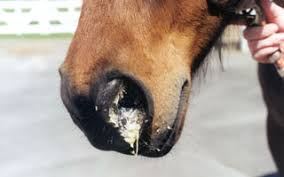
One of the first symptoms of Strangles is the snotty nose. Horses also often exhibit a cough and may have elevated temperature.
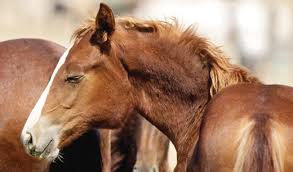
This is what puss filled lymph nodes look like. If not lanced and drained, it can compromise a horse's ability to swallow and breath.
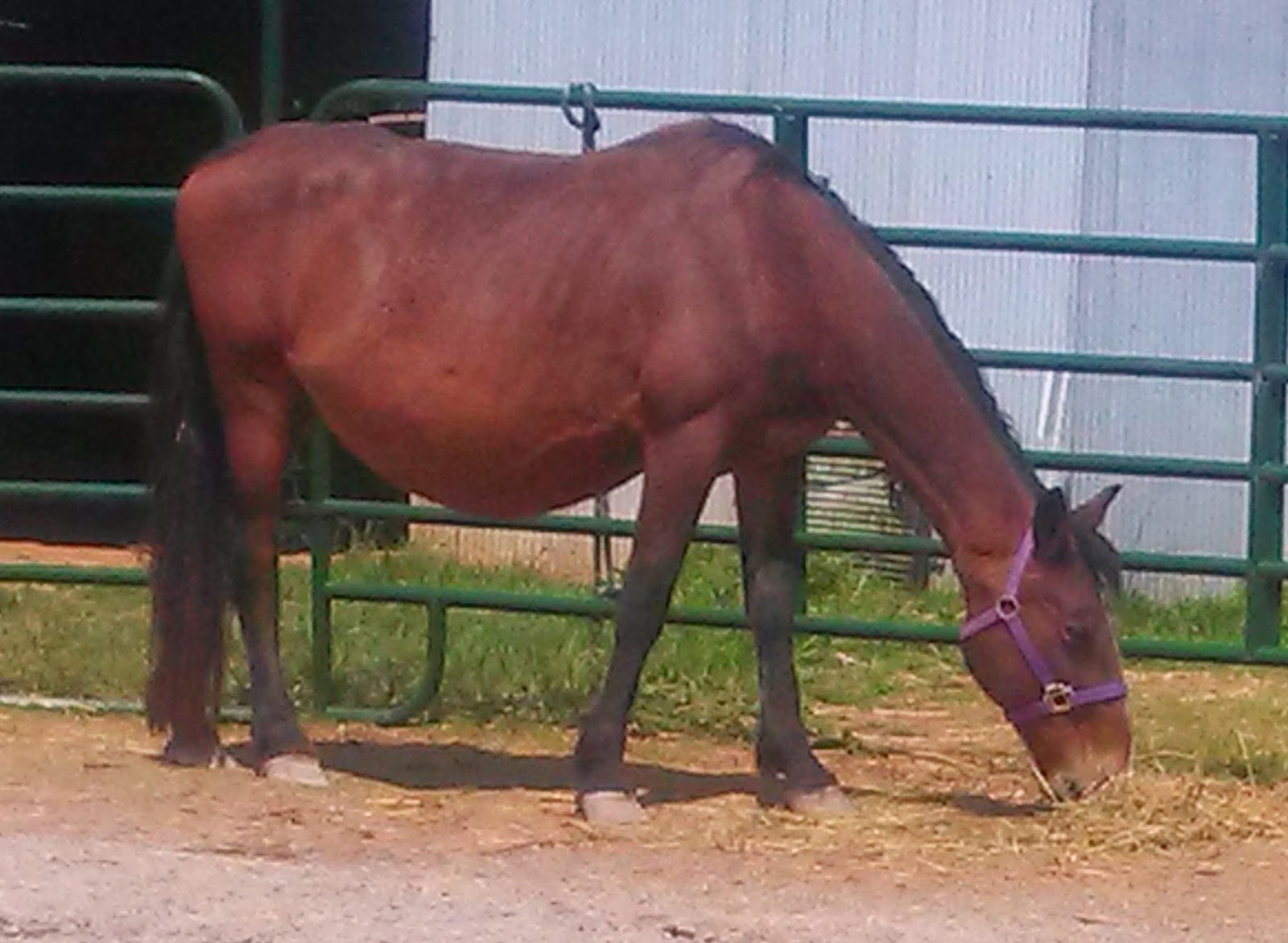
This is what the lymph nodes look like after they were lanced and drained. The draining puss is highly contagious.

Please keep us in your thoughts and prayers as we go through this difficult time. We will accumulate higher than normal vet bills and we will have to cancel several April events which will likely affect our fundraising efforts.
If you would like to donate to Horse Haven, you may do so by pay pal or snail mail to PO Box 22841 Knoxville TN 37933.
Thank you for your support.




.jpg)

